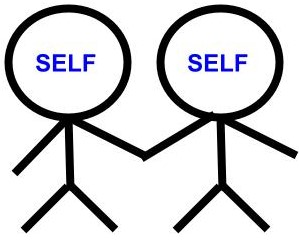
 Which is the most important relationship in your life? Life partner, parents, children, siblings or friends?
Actually, none of these is the right answer. Your relationship with yourself is the most significant relationship in your life. This is the relationship which will have a huge impact on all the other relationships in your life. It will also impact your work performance, success, failure and most of all happiness.
Self-esteem is one of the best indicators of your relationship with yourself. Just as we form opinions about other people, we form opinions about ourselves too. Sometimes they are accurate, and sometimes they are not.
What is your true opinion of yourself? Not what you tell other people, but what you actually think of yourself?
Think of yourself as another person and answer these questions honestly:
- Do you respect and admire this person?
- Would you want this person in your life?
These questions will give you the answer to the more compelling question “What is your relationship with yourself?”
If you answered in the positive, then you have healthy self-esteem. If it’s not a resounding positive, or if it’s negative, then maybe you’re in the middle, or you have low self-esteem.
Low self-esteem manifests in two ways:
The first and obvious way is the person becoming a push-over. Such people are not able to stand up for themselves. They are constantly seeking approval from others, and can be people pleasers.
They seek approval externally, because they don’t receive approval from within.
They are unable to maintain boundaries, and may allow others to treat them disrespectfully or hurtfully. They could be completely unaware that they have low self-esteem.
The second way low self-esteem manifests itself is in toxic behaviours. The person may outwardly appear very confident, and the last thing you would associate with him is low self-esteem. But the low self esteem expresses itself in a twisted way.
Highly controlling people, who constantly want to feel superior are actually suffering from low self-esteem, and may not be aware of it. Their thinking could go like this “This person has to obey me, and do everything as I say, otherwise he will be out of my control”.
They don’t feel powerful and confident within, so they need to derive power and control externally, and they also have a paranoid fear of losing this power and control.
Narcissists may have low self esteem. Their constant need to feel superior by having things done the way they want, and complete disregard for others may emerge from their insecurities and their fears.
Improving self esteem means improving your relationship with yourself. And like all other relationships, the relationship with yourself also needs hard work. You have to do the heavy lifting, put in the required effort, overcome temptations and distractions, execute on your goals and build healthy relationships to maintain high self esteem.
Alignment with values is a huge contributor to self-esteem. Aligning with values needs us to choose the right path which could be hard, and let go of the wrong path, which might be easy. Many of us fail in these tests that life keeps throwing at us. Everytime we fail a test, our self esteem goes down.
Nothing kills self esteem faster than regret, and having a poor opinion about yourself. Other’s poor opinions of us will not cause as much hurt and pain, as our own poor opinion of ourselves.
Suggestions for improving self esteem
- Create small goals for yourself, and work hard to achieve them. A new hobby, sport, exercise or a goal related to your work. Make a start with small wins. The feeling of accomplishment will build up your sense of inner worth.
- Maintain your integrity. From easy to difficult situations, think about the issue in detail. How will you ensure you maintain your integrity? What will you gain if you lose your integrity? Can the gain be more than the loss of your self-esteem?
- Start maintaining boundaries from people who disrespect or hurt you. Become assertive with them, and don’t let them take you for granted.
Before taking action, question yourself “What will I think of myself after this action? Will it increase or decrease my self-esteem?
Follow me on Linkedin for insightful content on self-development, leadership, anything and everything that makes us and our lives better. https://www.linkedin.com/in/gulshanwalia/
 Gulshan Walia Blog