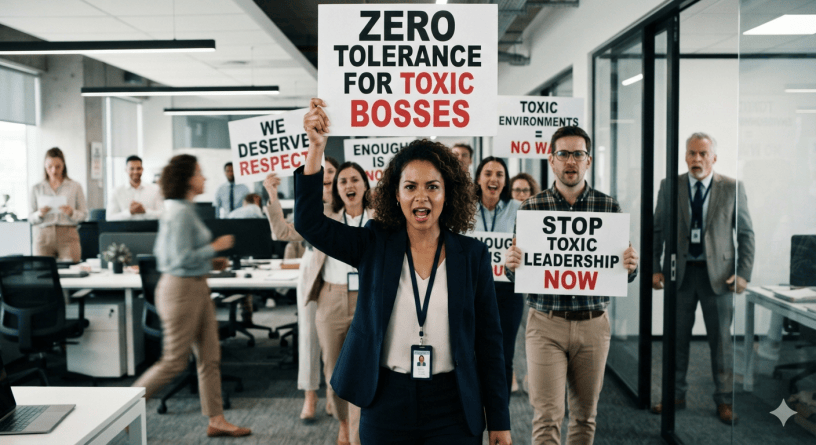
Toxic bosses exist, thrive and succeed (conventional success — money, fame etc.). They are “allowed” to exist and flourish, so they do. In all likelihood, they are delivering strong results for the organization, so there is no focus on “how” they get the results. And therein lies the problem.
If the organization culture accepts toxicity, it will thrive, otherwise it won’t. “Culture overrides personalities”, and building a zero tolerance culture for toxic bosses will eradicate the problem.
Here are some suggestions to build such a culture:
- Lead from conviction
Leadership and HR need to have the conviction that toxic bosses are harmful. They have to open their eyes to hidden costs of toxicity — attrition, disengagement, low productivity etc. It is estimated that attrition costs 1.5–2 times the employee’s annual salary. Disengagement can reduce productivity by half, thus giving the organization only half the return on its investment.
Put a money equivalent to these costs, and it is evident that this is a huge loss.
2. A robust decision making system for choosing a leader :
The decision making process for leaders (internal promotion or external hires) should include checking for “people leadership” skills besides functional skills Assessment centres, Behavioural Event Interviewing technique, reviews of past performance are a few ways to select the right leaders.
The damage from a bad leader cascades down through layers of employees, and gets multiplied through ripple effects.
3. 360 Feedback
Many organizations use 360 feedback for leaders to help them improve on their leadership skills. This is an excellent tool to hold leaders accountable for their leadership performance. I believe all organizations must make good use of this tool, both for development and decision making.
4. Leadership Development
Building leadership skills in the organization, training leaders on competencies like empathy, integrity, managing teams etc. goes a long way in helping to address this problem.
5. Training on Managing Upwards
It is true that employees leave their job due to a bad boss. But, a chunk of these employees could be difficult subordinates themselves. I can say this with confidence because I have been on both sides of the relationship.
With the wisdom that comes only with time, experience and hindsight, I have learned that I could have managed relationships with my bosses in a better way. There were times I could have chosen different and better words. There were times I could have chosen different and better actions. Subordinates also need to build their relationship management skills for Managing Upwards
The problem of toxic bosses is like a leaky tap. If you don’t pay attention, you will keep losing precious water. And in this case, precious talent. Fix the leak.
 Gulshan Walia Blog