“I never allow myself to hold an opinion on anything that I don’t know the other side’s argument better than they do”
― Charlie Munger
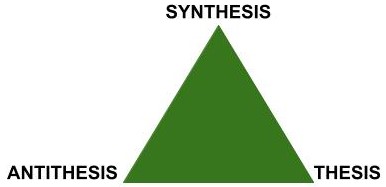
 The best thinkers in the world understand the importance of looking at a situation from multiple perspectives, especially the opposing perspective. The Greeks taught this to us through their method of dialectics (commonly known as discussion). It starts with arguments (thesis), counter-arguments (anti-thesis), and concludes with synthesis – evolution into a higher truth.
The strength of an argument is tested by opposing it. If it crumbles in the face of logic and reasoning, then it needs to be modified accordingly. But, if it can triumph opposing forces, then it is the truth.
Subjecting ideas and propositions to challenge is vital to test their robustness. All flaws, contradictions, assumptions, nuances are revealed and filtered through the back and forth of debate and disagreement. The proposition has greater integrity and wholeness after going through this filtering process.
Leaders who believe in the power of critical thinking will actively seek out disagreement to their ideas and propositions. They will work through the disagreements with logic and reason. They know that ideas need to be put through stress tests to evolve and become better.
It needs a strong sense of inquiry and humility to allow disagreement and debate in the team.
The returns are completely worth it. The better the quality of thinking, the better the quality of decisions and performance.
The second benefit of encouraging debates and disagreements is employee engagement. When employees are allowed to disagree, challenge and share their opinions, they know that they matter, and that they are valued. This leads to a huge increase in engagement, which again leads to higher performance.
Clearly, organizations have a lot to gain from encouraging a culture of debate and dialogue. I am sharing a simple technique known as 6 Thinking Hats for practicing critical thinking.
Edward de Bono – the father of lateral thinking developed the Six Thinking Hats approach. It is a way of parallel thinking in different directions. Each hat represents a perspective for thinking: For e.g., the Green hat represents creativity, so when the whole group wears the green hat they come up with new, creative ideas and thoughts around the situation.
Red Hat – Heart, feelings and emotions. Everyone can express their feelings about the situation
Yellow Hat – Optimism and benefits. Everyone talks about the advantages associated with the situation.
Black Hat – Devil’s Advocate, disagreements and conflicts. Everyone talks about what could go wrong or what are the disadvantages associated with the situation
White Hat – Information gathering, facts and data. Everyone shares information around the situation, as well as the information that is missing and needs to be gathered
Blue Hat – The conductor’s hat for managing the complete discussion and dialogue
The 6 thinking hats approach gets people to look at the situation from one perspective at a time. They look at the situation through 6 different perspectives totally, and there is in depth, concentrated thinking on each perspective.
Try the 6 thinking hats approach for your own thinking as well as group discussions, and you are bound to see an improvement in the quality of thinking.
Learn more about six thinking hats at https://www.mindtools.com/pages/article/newTED_07.htm
Follow me on Linkedin for insightful content on self-development, leadership, anything and everything that makes us and our lives better. https://www.linkedin.com/in/gulshanwalia/
References:
https://www.goodreads.com/quotes/7447184-i-never-allow-myself-to-hold-an-opinion-on-anything
https://en.wikipedia.org/wiki/Dialectic
https://www.mindtools.com/pages/article/newTED_07.htm
Image source — https://en.wikipedia.org/wiki/Dialectic
 Gulshan Walia Blog